#442 Computer Science & Perl Programming
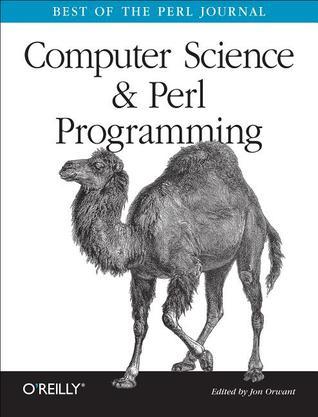
Book notes - Computer Science & Perl Programming: Best of The Perl Journal, by Jon Orwant. First published November 4, 2002.
Notes
This is the book that kept me entertained and occupied while on an extended work assignment in Japan some years ago. After a stressful week and all the chores out of the way, there was nothing more enjoyable than finding a quiet coffee shop on a Sunday to relax for a few hours, read a chapter or two, and pull out the laptop to explore some of the examples.
I finished that assignment with a deep set of Perl skills (we were using it at work too), which have since almost completely atrophied!
Contents
- 1 Introduction
- I Beginner Concepts
- 2 All About Arrays
- 3 Perfect Programming
- 4 Precedence
- 5 The Birth of a One-Liner
- 6 Comparators, Sorting, and Hashes
- 7 What Is Truth?
- 8 Using Object-Oriented Modules
- 9 Unreal Numbers
- 10 CryptoContext
- 11 References
- 12 Perl Heresies
- II Regular Expressions
- 13 Understanding Regular Expressions, Part I
- 14 Understanding Regular Expressions, Part II
- 15 Understanding Regular Expressions, Part III
- 16 Nibbling Strings
- 17 How Regexes Work
- III Computer Science
- 18 Infinite Lists
- 19 Compression
- 20 Memoization
- 21 Parsing
- 22 Trees and Game Trees
- 23 B_Trees
- 24 Making Life and Death Decisions with Perl
- 25 Information Retrieval
- 26 Randomness
- 27 Random Number Generators and XS
- IV Programming Techniques
- 28 Suffering from Buffering
- 29 Scoping
- 30 Seven Useful Uses of local
- 31 Parsing Command-Line Options
- 32 Building a Better Hash with tie
- 33 Source Filters
- 34 Overloading
- 35 Building Objects Out of Arrays
- 36 Hiding Objects with Closures
- 37 Multiple Dispatch in Perl
- V Software Development
- 38 Using Other Languages from Perl
- 39 SWIG
- 40 Benchmarking
- 41 Building Software with Cons
- 42 MakeMaker
- 43 Autoloading Perl Code
- 44 Debugging and Devel::
- VI Networking
- 45 Email with Attachments
- 46 Sending Mail Without sendmail
- 47 Filtering Mail
- 48 Net::Telnet
- 49 Microsoft Office
- 50 Client-Server Applications
- 51 Managing Streaming Audio
- 52 A 74-Line Ip Telephone
- 53 Controlling Modems
- 54 Using Usenet from Perl
- 55 Transferring Files with FTP
- 56 Spidering an FTP Site
- 57 DNS Updates with Perl
- VII Databases
- 58 DBI
- 59 Using DBI with Microsoft Access
- 60 DBI Caveats
- 61 Beyond Hardcoded Database Applications with DBIx::Recordset
- 62 Win32::ODBC
- 63 Net:: LDAP
- 64 Web Databases the Genome Project Way
- 65 Spreadsheet:: WriteExcel
- VIII Internals
- 66 How to Improve Perl
- 67 Components of the Perl Distribution
- 68 Basic Perl Anatomy
- 69 Lexical Analysis
- 70 Debugging Perl Programs with - D
- 71 Microperl
Source Code
Example sources are maintained at https://resources.oreilly.com/examples/9780596003104/.
Cloning to an example_source folder:
git clone https://resources.oreilly.com/examples/9780596003104 example_source
Credits and References
- Computer Science & Perl Programming