#483 Django Design Patterns and Best Practices
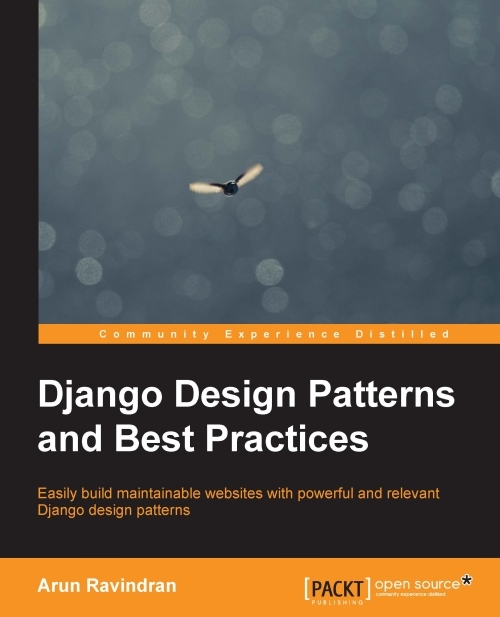
Book Notes - Django Design Patterns and Best Practices, by Arun Ravindran. First published March 1, 2015. 4th Edition 2011.
Notes
Contents
- Chapter 1: Django and Patterns
- Why Django?
- The story of Django
- A framework is born
- Removing the magic
- Django keeps getting better
- How does Django work?
- What is a Pattern?
- Gang of Four Patterns
- Is Django MVC?
- Fowler’s Patterns
- Are there more patterns?
- Patterns in this book
- Criticism of Patterns
- How to use Patterns
- Best practices
- Python Zen and Django’s design philosophy
- Summary
- Chapter 2: Application Design
- How to gather requirements
- Are you a story teller?
- HTML mockups
- Designing the application
- Dividing a project into Apps
- Reuse or roll-your-own?
- My app sandbox
- Which packages made it?
- Before starting the project
- SuperBook - your mission, should you choose to accept it
- Why Python 3?
- Starting the project
- Summary
- Chapter 3: Models
- M is bigger than V and C
- The model hunt
- Splitting models.py into multiple files
- Structural patterns
- Patterns - normalized models
- Pattern - model mixins
- Pattern - user profiles
- Pattern - service objects
- Retrieval patterns
- Pattern - property field
- Pattern - custom model managers
- Migrations
- Summary
- Chapter 4: Views and URLs
- A view from the top
- Views got classier
- Class-based generic views
- View mixins
- Order of mixins
- Decorators
- View patterns
- Pattern - access controlled views
- Pattern - context enhancers
- Pattern - services
- Designing URLs
- URL anatomy
- What happens in urls.py?
- The URL pattern syntax
- Names and namespaces
- Pattern order
- URL pattern styles
- Summary
- A view from the top
- Chapter 5: Templates
- Understanding Django’s template language features
- Variables
- Attributes
- Filters
- Tags
- Philosophy - don’t invent a programming language
- Organizing templates
- Support for other template languages
- Using Bootstrap
- But they all look the same!
- Template patterns
- Pattern - template inheritance tree
- Pattern - the active link
- Summary
- Understanding Django’s template language features
- Chapter 6: Admin Interface
- Using the admin interface
- Enhancing models for the admin
- Not everyone should be an admin
- Admin interface customizations
- Changing the heading
- Changing the base and stylesheets
- Adding a Rich Text Editor for WYSIWYG editing
- Bootstrap-themed admin
- Complete overhauls
- Protecting the admin
- Pattern - feature flags
- Summary
- Chapter 7: Forms
- How forms work
- Forms in Django
- Why does data need cleaning?
- Displaying forms Time to be crisp
- Understanding CSRF
- Form processing with Class-based views
- Form patterns
- Pattern - dynamic form generation
- Pattern - user-based forms
- Pattern - multiple form actions per view
- Pattern - CRUD views
- Summary
- How forms work
- Chapter 8: Dealing with Legacy Code
- Finding the Django version
- Activating the virtual environment
- Where are the files? This is not PHP
- Starting with urls.py
- Jumping around the code
- Understanding the code base
- Creating the big picture
- Incremental change or a full rewrite?
- Write tests before making any changes
- Step-by-step process to writing tests
- Legacy databases
- Summary
- Finding the Django version
- Chapter 9: Testing and Debugging
- Why write tests?
- Test-driven development
- Writing a test case
- The assert method
- Writing better test cases
- Mocking
- Pattern - test fixtures and factories
- Problem details
- Solution details
- Learning more about testing
- Debugging
- Django debug page
- A better debug page
- The print function
- Logging
- The Django Debug Toolbar
- The Python debugger pdb
- Other Debuggers
- Debugging django templates
- Summary
- Chapter 10: Security
- Cross-site scripting (XSS)
- Why are your cookies valuable?
- How Django helps
- Where Django might not help
- Cross-Site Request Forgery (CSRF)
- How Django helps
- Where Django might not help
- SQL injection
- How Django helps
- Where Django might not help
- Clickjacking
- How Django helps
- Shell injection
- How Django helps
- And the list goes on
- Why are your cookies valuable?
- A handy security checklist
- Summary
- Cross-site scripting (XSS)
- Chapter 11: Production-ready
- Production environment
- Choosing a web stack
- Components of a stack
- Hosting
- Platform as a service
- Virtual private servers
- Other hosting approaches
- Deployment tools
- Fabric
- Typical deployment steps
- Configuration management
- Monitoring
- Performance
- Frontend performance
- Backend performance
- Templates
- Database
- Caching
- Summary
- Production environment
- Appendix: Python 2 versus Python 3
- But I still use Python 2.7!
- Python 3
- Python 3 for Djangonauts
- Change all the unicode methods into str
- All classes inherit from the object class
- Calling super() is easier
- Relative imports must be explicit
- HttpRequest and HttpResponse have str and bytes types
- Exception syntax changes and improvements
- Standard library reorganized
- New goodies
- Using Pyvenv and Pip
- Other changes
- Further information
- Index
Getting the Example Source
git clone https://resources.oreilly.com/examples/9781783986644/ example_source