#449 Perl Hacks
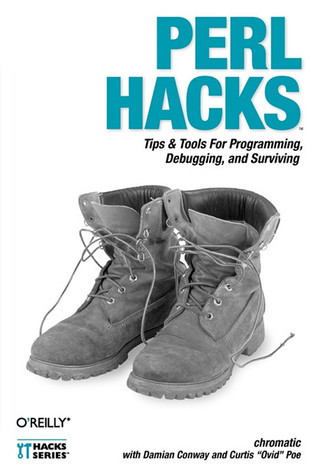
Book notes - Perl Hacks: Tips & Tools for Programming, Debugging, and Surviving by Shane Warden, Damian Conway, Curtis “Ovid” Poe. First published January 1, 2006.
Notes
Contents
- 1 Productivity Hacks
- Hack #2. Put Perldoc to Work
- Hack #3. Browse Perl Docs Online
- Hack #4. Make the Most of Shell Aliases
- Hack #5. Autocomplete Perl Identifiers in Vim
- Hack #6. Use the Best Emacs Mode for Perl
- Hack #7. Enforce Local Style
- Hack #8. Don’t Save Bad Perl
- Hack #9. Automate Checkin Code Reviews
- Hack #10. Run Tests from Within Vim
- Hack #11. Run Perl from Emacs
- 2 User Interaction
- Hack #13. Interact Correctly on the Command Line
- Hack #14. Simplify Your Terminal Interactions
- Hack #15. Alert Your Mac
- Hack #16. Interactive Graphical Apps
- Hack #17. Collect Configuration Information
- Hack #18. Rewrite the Web
- 3 Data Munging
- Hack #20. Read Files Backwards
- Hack #21. Use Any Spreadsheet As a Data Source
- Hack #22. Factor Out Database Code
- Hack #23. Build a SQL Library
- Hack #24. Query Databases Dynamically Without SQL
- Hack #25. Bind Database Columns
- Hack #26. Iterate and Generate Expensive Data
- Hack #27. Pull Multiple Values from an Iterator
- 4 Working with Modules
- Hack #29. Manage Module Paths
- Hack #30. Reload Modified Modules
- Hack #31. Create Personal Module Bundles
- Hack #32. Manage Module Installations
- Hack #33. Presolve Module Paths
- Hack #34. Create a Standard Module Toolkit
- Hack #35. Write Demos from Tutorials
- Hack #36. Replace Bad Code from the Outside
- Hack #37. Drink to the CPAN
- Hack #38. Improve Exceptional Conditions
- Hack #39. Search CPAN Modules Locally
- Hack #40. Package Standalone Perl Applications
- Hack #41. Create Your Own Lexical Warnings
- Hack #42. Find and Report Module Bugs
- 5 Object Hacks
- Hack #44. Serialize Objects (Mostly) for Free
- Hack #45. Add Information with Attributes
- Hack #46. Make Methods Really Private
- Hack #47. Autodeclare Method Arguments
- Hack #48. Control Access to Remote Objects
- Hack #49. Make Your Objects Truly Polymorphic
- Hack #50. Autogenerate Your Accessors
- 6 Debugging
- Hack #52. Make Invisible Characters Apparent
- Hack #53. Debug with Test Cases
- Hack #54. Debug with Comments
- Hack #55. Show Source Code on Errors
- Hack #56. Deparse Anonymous Functions
- Hack #57. Name Your Anonymous Subroutines
- Hack #58. Find a Subroutine’s Source
- Hack #59. Customize the Debugger
- 7 Developer Tricks
- Hack #61. Test with Specifications
- Hack #02. Segregate Developer and User Tests
- Hack #63. Run Tests Automatically
- Hack #64. See Test Failure Diagnostics - in Color!
- Hack #65. Test Live Code
- Hack #66. Cheat on Benchmarks
- Hack #67. Build Your Own Perl
- Hack #68. Run Test Suites Persistently
- Hack #69. Simulate Hostile Environments in Your Tests
- 8 Know Thy Code
- Hack #71. Inspect Your Data Structures
- Hack #72. Find Functions Safely
- Hack #73. Know What’s Core and When
- Hack #74. Trace All Used Modules
- Hack #75. Find All Symbols in a Package
- Hack #76. Peek Inside Closures
- Hack #77. Find All Global Variables
- Hack #78. Introspect Your Subroutines
- Hack #79. Find Imported Functions
- Hack #80. Profile Your Program Size
- Hack #81. Reuse Perl Processes
- Hack #82. Trace Your Ops
- Hack #83. Write Your Own Warnings
- 9 Expand Your Perl Foo
- Hack #85. Replace Soft References with Real Ones
- Hack #86. Optimize Away the Annoying Stuff
- Hack #87. Lock Down Your Hashes
- Hack #88. Clean Up at the End of a Scope
- Hack #89. Invoke Functions in Odd Ways
- Hack #90. Glob Those Sequences
- Hack #91. Write Less Error-Checking Code
- Hack #92. Return Smarter Values
- Hack #93. Return Active Values
- Hack #94. Add Your Own Perl Syntax
- Hack #95. Modify Semantics with a Source Filter
- Hack #96. Use Shared Libraries Without XS
- Hack #97. Run Two Services on a Single TCP Port
- Hack #98. Improve Your Dispatch Tables
- Hack #99. Track Your Approximations
- Hack #100. Overload Your Operators
- Hack #101. Learn from Obfuscations
Source Code
Example sources are maintained at https://resources.oreilly.com/examples/9780596526740/.
The repo contains a zipped version of the sources, so I uncompress them to an example_source folder
after cloning the repo:
git clone https://resources.oreilly.com/examples/9780596526740 example_source_repo
mkdir example_source
tar -zxvf example_source_repo/perl_hacks_examples.tar.gz -C ./example_source
Credits and References
- Perl Hacks